It’s that time of the year. The smell of the dry grass (or black rubber pellets if you have turf) simmering in the hot afternoon sun during the months of June, July, and August are distinct. It’s as if my circadian rhythm knows that it’s football season.
Before I dive in, I want to acknowledge two coaches who made me realize the importance of relationships in relation to coaching.
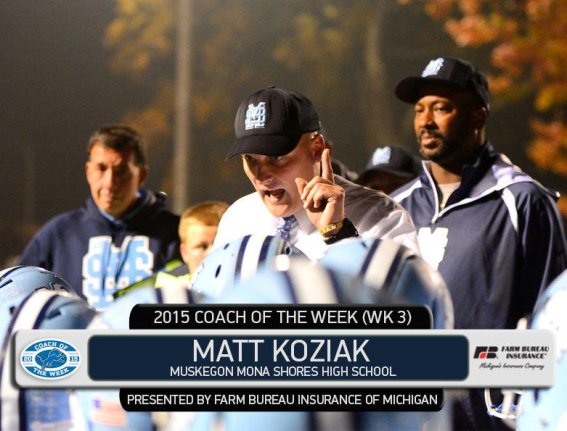
My junior year of high school was filled with ambiguity. I was now on the big stage, the pinnacle of Muskegon football. Varsity football. On a team with seniors whom I assumed had their positions on lock (meaning there was no question they were the starters), I eventually found myself in a position battle. One day during 2-a-days, Matt Koziak, who is currently the head coach of the 2018 state champion runner-up Mona Shores Sailors in Norton Shores, MI, was assisting me with my technique. He pulled me to the side and said, “This is your position. Don’t let any of the other guys take it from you. I know you can do it!” My confidence shot through the roof. I’ll never forget that day and I made sure to pass it on to the players I’ve coached over the years. Thanks coach.
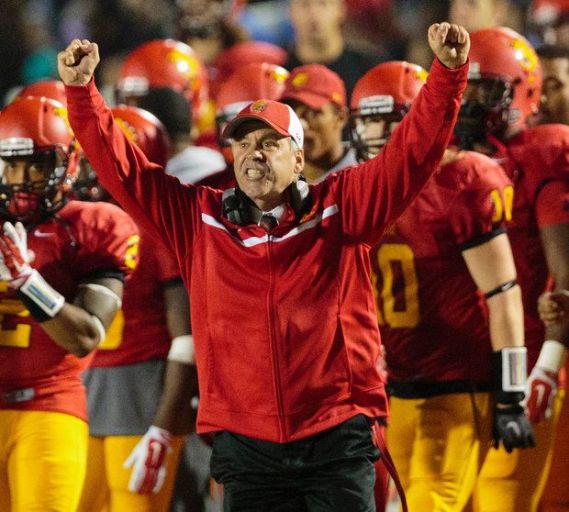
Certainly not least, is Tony Annese, who is currently the head coach of the 2018 national championship runner-up, Ferris State Bulldogs in Big Rapids, MI (there is a correlation here). Coach Annese had the ability to earn the respect of even the most hard-nosed kids from our community in Muskegon, MI. It was the summer heading into my senior year and I was expected to compete for one of the starting positions on the offensive line, once again. I worked really hard, but still didn’t feel like I was getting the recognition I felt I earned. I was defeated. One day, I decided to stay home instead of going to practice. That one-day turned into two. By the end of the second day, the house phone rang. It was Coach Annese on the other end. He asked me what was going on and why I hadn’t made it to summer workouts for two days. I replied with, “I don’t know” and his response resonates with me to this day. He said “well David, you are an important part of this team’s success this year and we need to have you around”. It was short and simple, but that statement made me feel like I was apart of something bigger than myself. Needless to say, we went on to win the 2006 state championship at Ford Field that year. Coach Annese even provided me opportunities to work his football camps during my coaching days. Thanks coach.
These two situations are examples of the huge impact a coach can have on a young man trying to find his way.
I spent some of the most pivotal years of my adult life coaching the game of football. In 2008, I was 19 years old and had no idea of what I wanted to do with myself post high school. College wasn’t in the cards yet. All in knew was I wanted to make an impact on lives like my coaches impacted mine. What started as a volunteer opportunity and way to keep and eye on my little brother, who was entering his freshman year of high school at the time, turned into the most rewarding experience of my life thus far. Some say it’s just a game. I wholeheartedly and fundamentally disagree with these simple minded people.
Football coaches make the ultimate sacrifice. You literally spend most of your time doing football related activities. Workouts, fundraising, keeping track of your student-athletes grades, building relationships with families, meeting with college coaches, scouting opponents, hours of film sessions and that’s just scratching the surface. Not to mention the off the record activities such as driving players to camps/college campuses, picking them up and taking them home after practice, feeding them, and making sure their basic needs are met. What’s funny is, you NEVER get tired of it. At least, that was my experience. Out of sheer love and determination, coaches make it HAPPEN behind the scenes. Coaches become an extended part of your family. I mean, just like the coaches, your kid more than likely spends most of their time engaged in football related activities as well.
We always talk about how important football can be for kids from a life perspective (discipline, responsibly, etc.), but I’ve yet to come across anything that explains how football impacts the lives of the coaches. So, I’m here to throw my bid in. There’s literally nothing like it. Watching your kid grow from one week to the other (short-term), then watching them go from a scrawny freshman to a young man, who college coaches are drooling over (long-term) is something else. I don’t wanna get too “scholarly”, but there is research out there that shows the impact/importance of student-coach relationships within inner-city communities (I have attached an article just in case you’re interested).Beyond the Playing Field: Coaches as Social Capital for Inner-City Adolescent African-American Males
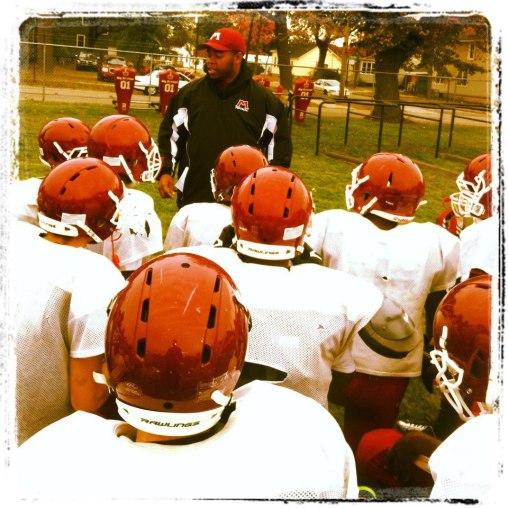
Coaching helped me find my way in life. I eventually went to college, but the first few years I wasted valuable time and money. Here I was, not taking advantage of school due to lack of motivation. Then, one day, it all started to make sense. I had a “light-bulb” moment. I ran into a kid who had just recently graduated high school and was working part-time at a local pharmacy. He was preparing to leave for college. He thanked me for everything and we reminisced on the times I “went off on him” during practice. That feeling was second to none.
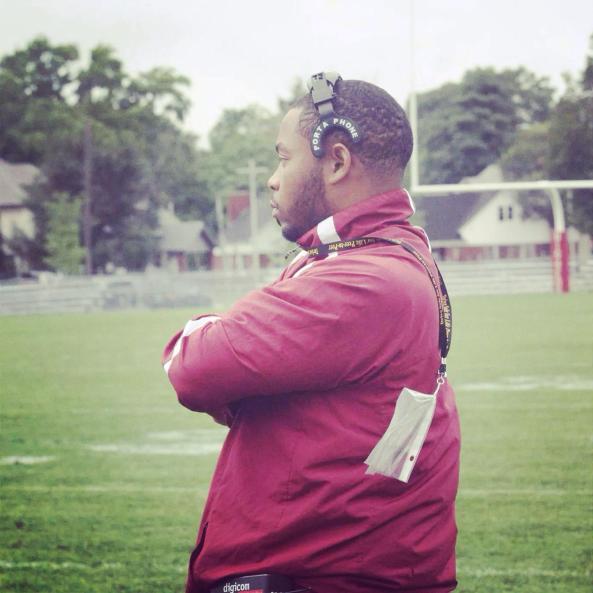
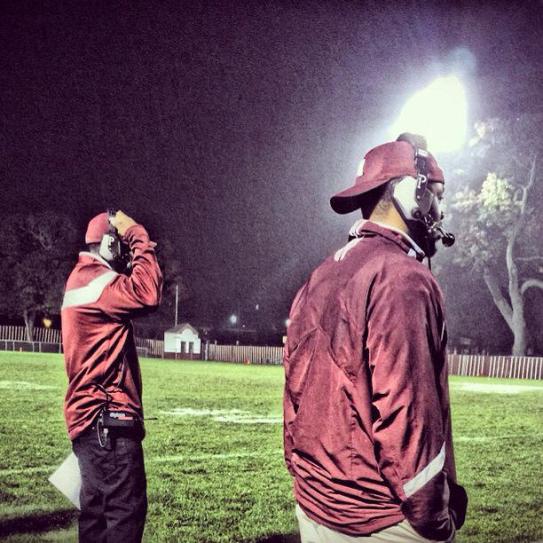
The answer to my future was dead smack in front of me this entire time. I realized my future was in working with young men and helping them navigate life as an adolescent/young adult. I eventually went on to become the Junior Varsity head coach, but Unfortunately, after the 2015 season, I had to make a sacrifice between completing my college degree and coaching. It was literally the hardest decision I’ve EVER had to make. I went on to work in different settings that allowed me to grow in my purpose while simultaneously completing my undergraduate degree in family studies at Western Michigan University. Truthfully, none of the professional experiences could compare. I’m currently pursuing a master’s degree in clinical social work with hopes of practicing therapy with adolescents during the day and coaching football during the night. The goal was always to obtain my degree and pick up right where I left off.
So, when you say “it’s just a game” or hear people refer to it as such, I hope this story encourages you to think again and maybe it’ll persuade you to consider telling them this short story. Because quite frankly, it’s WAY more than a game.
Signing off,
Dave
 MyMelaninJourney